Why Review Boat Pollution Liability Before You Need It
A small fuel or oil release can create a complicated problem: the spill may require immediate containment, professional cleanup, disposal, and reports to appropriate authorities. Boat pollution liability coverage may help with certain resulting expenses, but policies differ significantly in what they define as a pollutant and which cleanup costs they cover. For boat owners in Columbia, South Carolina, reviewing those details before launching is especially relevant when boating, fueling, or storing a vessel around Lake Murray. This guide lays out practical questions to ask so you can identify uncertainty in your policy and seek clear answers before an incident occurs.
What Boat Pollution Liability Usually Means
Pollution liability generally concerns legal responsibility for pollution-related injury, property damage, or cleanup, subject to the policy’s terms. It is not automatically the same as physical-damage coverage for your boat, nor does a general liability section necessarily pay every expense associated with a spill. The policy may use specific terms such as pollutant, discharge, release, cleanup costs, or environmental damage, and those definitions control how coverage applies. Ask for the actual wording rather than relying only on a summary. Also ask whether coverage applies to sudden accidental releases only, or whether it addresses gradual leaks discovered over time, since that distinction can materially affect a claim.
Ask Which Substances Count as Pollutants
Start by asking the insurer or licensed insurance professional to identify every substance included in the policy’s pollutant definition. Fuel and lubricating oil are obvious concerns, but owners should also ask about gasoline additives, hydraulic fluid, solvents, cleaning products, sewage, and waste carried aboard. A policy may treat one substance differently from another, or define pollution broadly while applying separate exclusions. Consider realistic situations: a damaged fuel line leaks while the boat is tied at a Lake Murray dock, or a container of cleaning fluid spills during transport. Ask whether the policy considers each event a covered pollution incident and whether the answer changes if the substance enters water, soil, or a marina facility.
Clarify Cleanup Expenses and Who Arranges Them
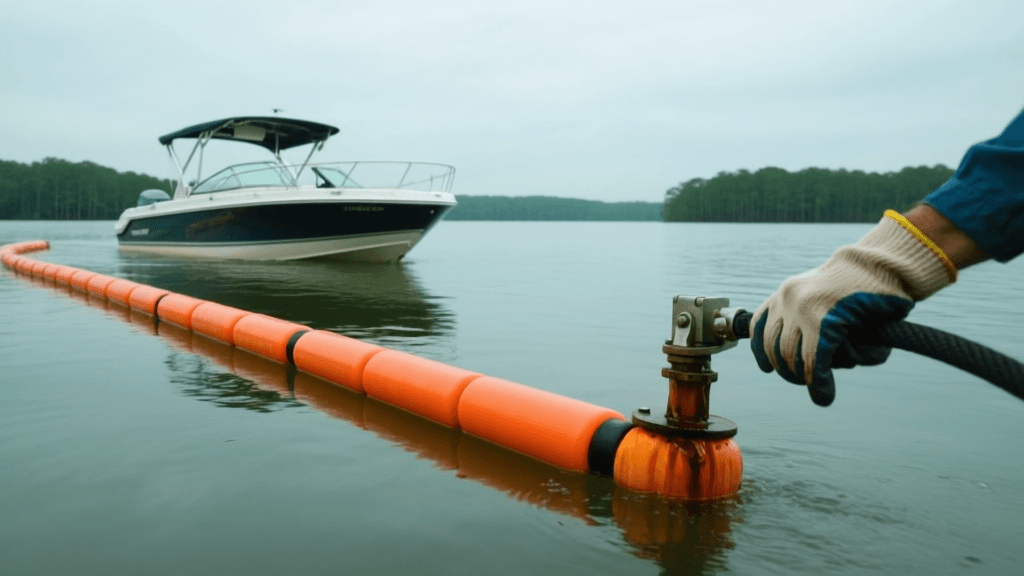
Ask whether covered cleanup costs include containment booms, emergency response, pumping, removal of contaminated material, disposal, testing, and restoration of affected property. Find out whether the policy pays these expenses directly, reimburses you after payment, or requires the insurer’s approval before a contractor begins non-emergency work. In a spill, immediate steps may be necessary to limit damage, but an owner should know how to contact the claims team and what documentation to preserve. Request guidance on approved vendors, receipts, photographs, incident notes, and invoices. Also ask whether the policy covers reasonable emergency measures taken to prevent a release from spreading while formal response arrangements are being made.
Understand Reporting Duties and Deadlines
Policies can require prompt notice after an accident, suspected discharge, or demand for cleanup, and some require cooperation with an investigation. Ask exactly whom to contact, what information to provide, and whether notice must be given even when the spill appears minor or no one has yet demanded payment. Clarify whether you should notify marina management or public authorities as well as the insurer; legal and environmental reporting duties can depend on the circumstances and applicable rules, so do not assume an insurance call satisfies them. Keep a record of the time, location, substance, estimated quantity, witnesses, response actions, and any instructions received. When uncertain, prioritize safety and timely reporting rather than waiting for damage to become obvious.
Compare Limits, Deductibles, and Defense Coverage
Ask for the pollution liability limit and whether it is per occurrence, an annual aggregate, or shared with another liability coverage. A modest-looking spill can involve several expense categories, so learn whether cleanup costs reduce the same limit available for legal defense, bodily injury, or property damage. Confirm whether a deductible or self-insured amount applies and whether separate sublimits cap emergency response or removal costs. If you own a larger vessel, keep it at a busy marina, or carry fuel and equipment for extended trips, discuss whether the selected limit fits the possible exposure. Do not compare limits alone: the definition of a covered event and the exclusions may matter just as much as the headline number.
Review Exclusions and Coordination With Other Policies
Ask about exclusions for gradual leakage, wear and tear, intentional acts, contractual liability, fuel tanks, sewage, or pollution from a vessel that is not listed on the policy. The exact exclusions vary, so request examples tied to your boat and usual activities. Then check how the boat policy coordinates with homeowners, umbrella, marina, or commercial coverage, if any. A homeowners policy may have watercraft restrictions, and an umbrella policy may follow underlying exclusions rather than fill every gap. If a marina agreement requires particular insurance or indemnity terms, compare those requirements with the policy instead of assuming that signing a contract creates coverage. Ask the professional reviewing your insurance to identify potential overlap, gaps, and any conditions that must be met.
Columbia and Lake Murray Details to Discuss
Columbia-area owners may use Lake Murray from different launch points, keep boats at marinas, or trailer vessels between the lake and home. Explain your actual routine when reviewing coverage: where the boat is stored, how often it is launched, whether it is used for business, and whether other people operate it. Ask whether the policy follows the boat while trailered, at a slip, or during transport, and whether coverage changes outside the listed territory. Owners in Lexington, Chapin, Ballentine, West Columbia, Cayce, and nearby communities can have different storage and access arrangements, but the key is to disclose the real use and location. Do not treat local familiarity as a substitute for confirming the policy’s geographic and operational terms.
Policy Review Checklist
Questions to Get Answered in Writing
- Which fuels, oils, chemicals, sewage, and other substances meet the policy’s pollutant definition, and are sudden and gradual releases treated differently?
- Which containment, cleanup, disposal, testing, and restoration costs are covered, and what prior approval is required?
- How quickly must an incident be reported, whom should the owner contact, and what records should be kept?
- What are the occurrence and aggregate limits, applicable deductibles, and any sublimits for cleanup or emergency response?
- Which exclusions apply to the owner’s vessel, storage arrangement, marina use, and typical boating activities?
- How does this coverage coordinate with homeowners, umbrella, marina, or other liability policies?

What to Do Before Your Next Launch
Gather your declarations page, complete policy wording, vessel details, and any marina insurance requirements. Make a short list of how and where you use the boat, then ask a licensed insurance professional to explain the pollution definition, cleanup provisions, notice requirements, limits, and exclusions using examples that resemble your situation. Request written clarification where possible and keep the insurer’s claims contact accessible aboard or on your phone. If you discover a gap, ask what optional endorsements or alternative coverage may be available and compare the costs with the potential exposure. This review is not a substitute for legal or environmental advice, but it can help you understand what your policy says before an unexpected spill demands quick decisions.
Review Your Boat Policy With Confidence
Compare your policy wording and ask a licensed insurance professional to clarify any pollution liability terms that remain uncertain.
Get a Free Quote