Why a Small Boat Spill Deserves a Fast Response
A few drops of gasoline or oil can spread quickly across the water, create a fire hazard, and become harder to contain as a boat moves or wind shifts. If a spill happens aboard a vessel near Columbia, first protect people; then stop the release if it is safe and practical. Do not start an engine, smoke, or operate electrical equipment around strong fuel vapors. This guide covers immediate precautions, reporting, records to preserve, and insurance questions to review. Whether boating on Lake Murray or preparing a vessel at a nearby ramp, having a response plan and spill supplies onboard can make a stressful incident more manageable.
How Lake Murray Conditions Can Affect a Spill
Lake Murray brings together busy boating areas, marinas, docks, coves, and public access points. A spill may drift toward a shoreline, dock, or other vessels before the operator can react, while wake and wind can spread a sheen beyond its original location. Fuel released during refueling, a damaged line, or an overfilled tank can also create vapors in an enclosed compartment. Conditions vary by location and weather, so avoid assuming a spill is harmless because it looks small. Keep the vessel secured if safe, note wind and water conditions, and follow directions from emergency personnel or lake authorities. Local context matters, but safety and official instructions come first.
Put People and Fire Safety First
Move passengers away from the source and into fresh air, taking care not to step through or spread spilled fuel. If anyone feels dizzy, nauseated, or has trouble breathing, seek emergency help. For a significant release, fire, injury, or immediate danger, call 911 and give the location, vessel description, and known hazards. Shut off the engine and ignition only when doing so does not expose anyone to vapors or another danger. Do not use a phone or switch electrical devices inside a space with strong gasoline fumes. Avoid trying to handle a large release yourself; create distance and let trained responders direct the scene.
Stop the Source and Limit the Spread Only If Safe
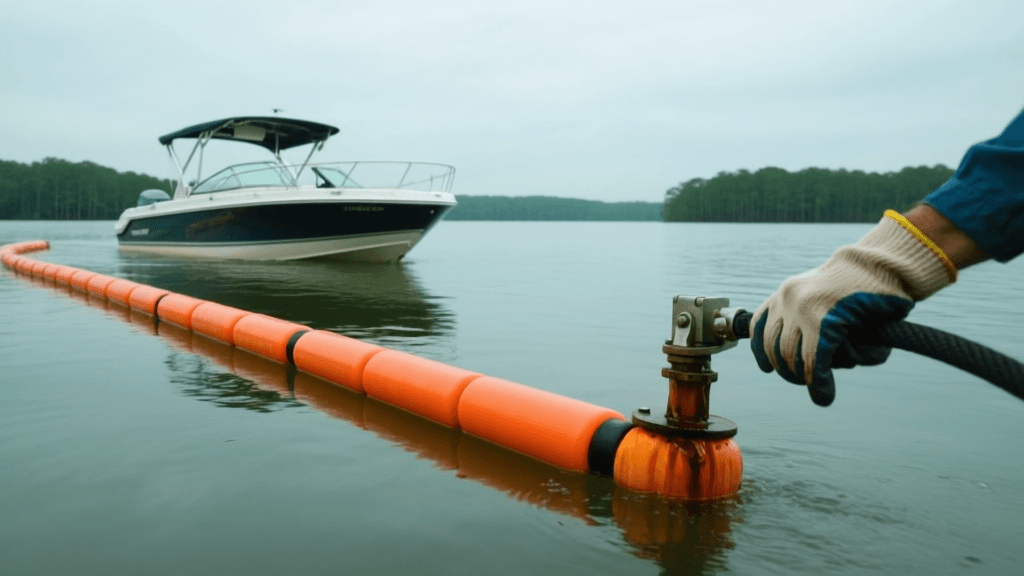
Once people are clear and there is no immediate fire or vapor danger, stop the leak if you can do so without risk. This might mean closing a fuel shutoff valve, stopping refueling, or placing an absorbent pad beneath a small drip. Use marine spill-control materials designed for fuel and oil, and follow their instructions. Never wash fuel overboard with water, use household detergents, or put an absorbent material into a position that could endanger someone. Do not attempt to contain a large or spreading discharge without proper training and equipment. Keep others away, prevent ignition sources, and report the release so the appropriate authority can determine the next response.
Contact the Right Authorities Promptly
Reporting requirements depend on the substance, amount, location, and circumstances, and federal or state rules may apply. If fuel or oil reaches the water, creates a sheen, or presents a danger, promptly contact emergency services or the relevant marine and environmental authorities for instructions rather than guessing whether a report is required. In an emergency on Lake Murray, call 911; for non-emergency concerns, ask lake or state officials which reporting channel applies. Give factual information: what was released, when it occurred, the approximate amount if known, where the boat is, and whether the source has been stopped. Record the names of agencies contacted, the time, and any instructions received.
Document What Happened Without Delaying the Response
After immediate hazards are addressed, make a clear record while details are fresh. Note the date, time, weather, approximate location, vessel identification, suspected source, and what actions were taken. Photograph the damaged hose, fitting, tank, or other component only when it is safe and responders permit it; do not photograph people who need help instead of assisting them. Save receipts for cleanup materials, towing, repairs, or professional response, and keep copies of authority reports and written instructions. If witnesses are present, ask for their contact information without arguing about fault. A factual timeline is more useful than guesses about the cause or quantity released.
What Columbia-Area Boaters Should Keep in Mind
Boaters launching from Columbia or traveling from Lexington, Chapin, Ballentine, West Columbia, and Cayce may use different access points and encounter different response conditions. On Lake Murray, a narrow cove, crowded dock, or distance from a ramp can affect how quickly help reaches a vessel. Keep the boat's location easy to describe, and identify a nearby marina, landing, or recognizable shoreline feature when calling for assistance. Before the season, check fuel lines, connections, tank vents, and bilge areas for leaks or fuel odors, and carry suitable absorbents. These precautions do not replace a response plan, but they can reduce the chance that a preventable equipment issue becomes a larger incident.
Key Takeaways for a Safer Response
A Practical Spill-Response Checklist
- Protect passengers first, move them to fresh air, and call 911 for injury, fire, dangerous vapors, or an immediate threat.
- Avoid ignition sources and do not start the engine or operate electrical equipment where fuel vapor may be present.
- Stop a small leak only if safe; use appropriate absorbents and never wash fuel or oil into the water.
- Report a release promptly to the appropriate authority and follow its instructions about containment and cleanup.
- Record the time, location, suspected source, actions taken, agency contacts, photographs, and related expenses once the scene is safe.

Review Your Policy and Prepare Before the Next Trip
Boat insurance policies do not all treat fuel spills, pollution cleanup, third-party property damage, and bodily injury the same way. Review the policy wording for pollution liability, exclusions, notification deadlines, limits, deductibles, and any conditions about approved cleanup providers. After an incident, notify the insurer promptly using the claims instructions in the policy, even if the final amount of damage is not yet known. Share the facts and records you have, and ask what documentation is needed before authorizing non-emergency repairs or cleanup. Before heading back to Lake Murray, inspect the repaired system and confirm that authorities have released the vessel for use if they were involved.
Make Spill Readiness Part of Your Boating Plan
Compare boat policy terms, keep response supplies onboard, and know whom to contact before a fuel or oil release occurs.
Get a Free Quote